


Page 38 - TTG-Taiwan Transportation Equipment Guide (TTG) 2026-09 Edition
P. 38
36
       Industry Technology


              health conditions. In emergency situations, the system can also support autonomous roadside stopping to
              reduce the risk of hazardous driving and roadside collisions. Both technologies are designed in alignment
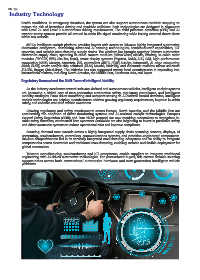
              with Level 2+ and Level 3 autonomous driving requirements. The child presence detection (CPD) and AI
              exterior sentry systems provide all-around in-cabin life-signal monitoring while issuing external threat alerts
              within ten seconds.
                 ARTC’s intelligent cockpit platform provides buyers with access to Taiwan’s highly integrated automotive
              electronics ecosystem, combining advanced AI sensing technologies, semiconductor capabilities, ICT
              expertise, and scalable manufacturing supply chains. The platform has brought together Taiwan’s automotive
              electronics supply chain, spanning in-cabin camera modules (Chimei Motor, oToBrite, Whetron), in-cabin radar
              modules (TMYTEK, WNC, Hon-Tsai, Nutek), smart display systems (Pegatron, CarUX, AUO, GIS), high-performance
              computing (ASUS, Neousys, Advantech, VIA), controllers (ARTC, HCMF, AutoSys, Advancetek), AI edge computing
              (Nutek, ELAN), smart cockpit chip solutions (ELAN, Novatek, MediaTek), and electronic rearview mirror solutions
              (E-LEAD, Voyager, Chimei Motor). The initiative has also supported twenty local manufacturers in expanding into
              international markets, including North America, the Middle East, Southeast Asia, and Japan.

              Regulatory Demand and the Shift Toward Intelligent Mobility

                 As the industry accelerates toward software-defined and autonomous vehicles, intelligent cockpit systems
              are becoming a critical part of next-generation automotive safety, regulatory compliance, and intelligent
              mobility strategies. From driver monitoring and occupant sensing to AI-assisted hazard detection, intelligent
              cockpit technologies are helping manufacturers address growing regulatory requirements, improve in-cabin
              safety, and enhance real-time vehicle awareness.

                 Growing regulatory and safety requirements across Europe, North America, and the Middle East are
              accelerating the adoption of driver monitoring systems and AI-assisted cockpit technologies. Europe’s
              General Safety Regulation (GSRII) and Euro NCAP protocol are now requiring automakers to strengthen in-
              cabin safety functions, commercial fleet operators worldwide are also beginning to invest in predictive safety
              and driver awareness systems to reduce operational risks and improve compliance.

                 Sourcing demand now extends across a highly integrated supply chain spanning sensors, displays, AI
              computing, semiconductors, controllers, communications systems, and precision-engineered components.
              Taiwan’s competitiveness lies in its vertically integrated manufacturing ecosystem and its ability to integrate
              competencies across electronics and traditional manufacturing, enabling scalable and flexible deployment for
              global automakers.

                 Taiwan’s manufacturing, semiconductor, and ICT ecosystems, enable suppliers to integrate traditional
              engineering with AI-driven automotive technologies. For procurement buyers, this creates scalable sourcing
              opportunities across both conventional automotive hardware and next-generation intelligent vehicle
              platforms.

