


Page 45 - TTG-Taiwan Transportation Equipment Guide (TTG) 2026-09 Edition
P. 45
43
                                                                                     Industry Technology


              system; KopherBit, Hydrogen Valley Power, and ITRI for
              the Vehicle Control Unit (VCU); CPC Corporation Taiwan
              and Linde LienHwa for hydrogen refueling interface
              systems; Formosa Smart Energy for the lithium-ion
              battery pack; SYC and Hydrogen Valley Power for the
              vehicle chassis; Luxfer for hydrogen storage tank
              components; and Advantech for the ADAS module.

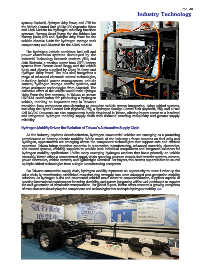
                 The hydrogen vehicle combines fuel cell and
              power conversion systems developed by the
              Industrial Technology Research Institute (ITRI) and
              Delta Electronics, a traction motor from ZEPT, battery
              systems from Formosa Smart Energy, and the vehicle
              body and chassis supplied by Shung Ye Group and
              Hydrogen Valley Power. The bus also integrates a
              range of advanced electronic control technologies,
              including hybrid power management, vehicle
              control, hydrogen storage control systems, and
              driver assistance technologies from Advantech. The
              collective effort of the vehicle would make Hydrogen
              Valley Power the first company in Taiwan to secure
              UNR134 certification for producing a hydrogen
              vehicle, marking an important step in Taiwan’s
              transition from component manufacturing to complete vehicle system integration. Other critical systems,
              including the Hybrid Control Unit (KopherBit, ITRI), a Hydrogen Storage Control Unit (KopherBit, ITRI), and a Fuel
              Cell DC/DC Converter, are also components locally developed in Taiwan, offering buyers access to a localized
              and integrated hydrogen mobility supply chain with reduced sourcing complexity and greater supply
              reliability.

              Hydrogen Mobility Drives the Evolution of Taiwan’s Automotive Supply Chain

                 As the industry explores decarbonization, hydrogen commercial vehicles are emerging as a promising
              complement to battery-electric mobility. While much of the industry's focus remains on fuel cells and
              hydrogen, opportunities are emerging across the component technologies that support safe and efficient
              operation. Taiwan brings together expertise in automotive manufacturing, advanced materials, electronics,
              and control systems, enabling suppliers to provide both individual components and integrated solutions for
              hydrogen mobility applications. Unlike many emerging hydrogen markets that focus primarily on vehicle
              assembly, Taiwan offers a concentrated supply chain spanning pressure vessels, fluid transfer systems, sensors,
              power electronics, vehicle controls, and lightweight materials. For buyers, this creates opportunities to source
              multiple critical technologies from a single manufacturing ecosystem.

                 For Taiwan's automotive supply chain, hydrogen mobility represents an opportunity to move further up the
              value chain by transforming established manufacturing strengths into more advanced next-generation mobility
              solutions. As hydrogen buses and commercial vehicles move closer to commercialization, suppliers capable of
              meeting international requirements for safety, durability, and system integration will be well-positioned to support
              the next generation of sustainable transportation. For global buyers, Taiwan offers access to a growing ecosystem
              of manufacturers developing the components and technologies that underpin hydrogen mobility.

